

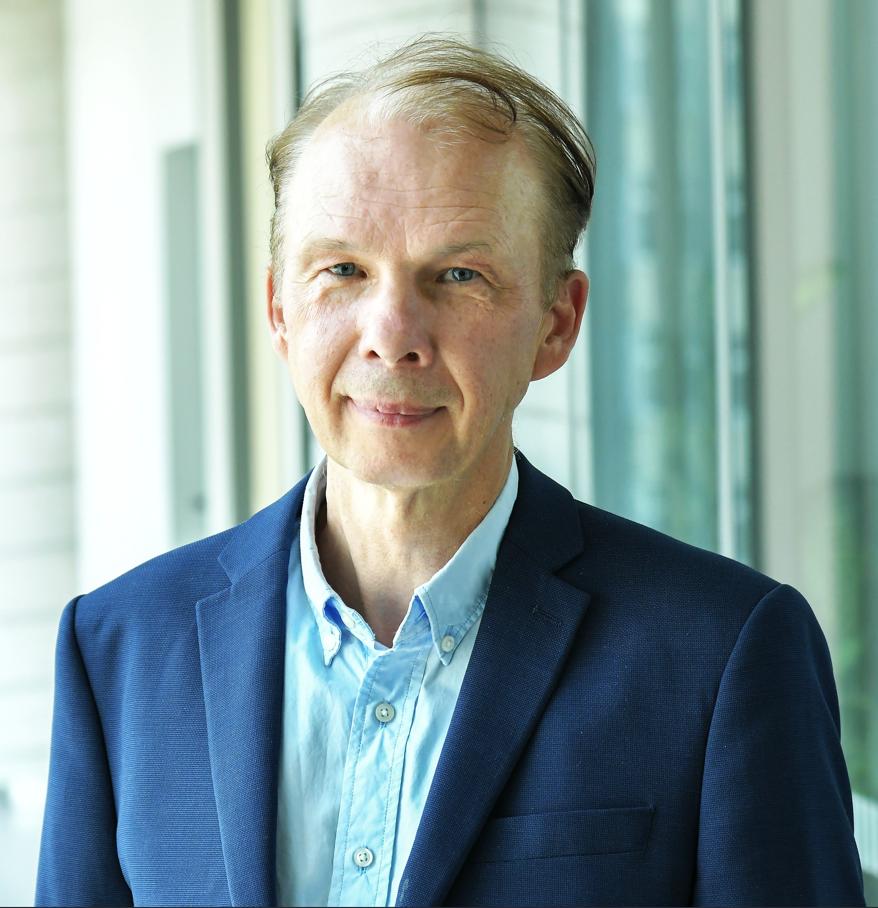
Prof. Artūras Kaklauskas
Vilnius Gediminas Technical University, Lithuania
PhD Dr Sc A. Kaklauskas is a professor at Vilnius Gediminas Technical University, Lithuania; Chair of the Department of Construction Management and Real Estate; a former member of the Research Council of Lithuania (2018–2023); a member of the Science Europe working group on Data Sharing and Supporting Infrastructures; a member of the European Open Science Cloud Steering Board; an expert to the intergovernmental meeting on UNESCO’s Draft Recommendation on the Ethics of AI; a member of the Lithuanian Academy of Sciences; the editor-in-chief of Journal of Civil Engineering and Management (Web of Science Q2 journal); an editor of Engineering Applications of Artificial Intelligence (international Web of Science Q1 journal); and an associate editor of Ecological Indicators, another international journal. He contributed to nine Framework and five Horizon 2020 projects and participated in over 30 other projects in the EU, the USA, Africa and Asia. He published 212 papers, totaling 5,180 citations in the Web of Science; his H-Index is 37.
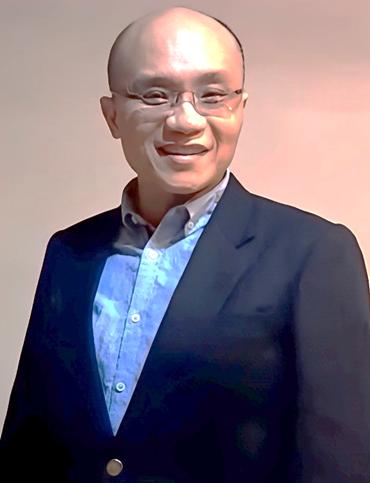
Assoc. Prof. Ling Lloyd
Universiti Tunku Abdul Rahman (UTAR), Malaysia
Ir. Dr. Ling Lloyd is an Associate Professor at the Lee Kong Chian Faculty of Engineering and Science (LKC FES) at Universiti Tunku Abdul Rahman (UTAR) in Malaysia. He is also a visiting professor at Ostbayerische Technische Hochschule (OTH) University in Germany, serving in the Faculty of Informatics and Mathematics. He earned a Master's degree in Engineering and two MBA degrees in Finance and International Business. He also prolonged his Post-MBA studies with Stanford University in Advanced Project Management and Negotiation. Before returning to Malaysia, he held several managerial positions in S&P 100 corporate and served on the corporate contingency planning committee. Ir. Dr. Ling Lloyd is also a Fellow of the ASEAN Academy of Engineering and Technology (AAET) and serves on the panels of the Engineering Technology Accreditation Council (ETAC) and the Engineering Accreditation Council (EAC) in Malaysia. Additionally, he is a member of the Earthquake Technical Committee of the Department of Standards Malaysia under the Ministry of International Trade and Industry (MITI). He is a registered professional engineer in Malaysia, a member of the Institution of Engineers, Malaysia (IEM), serving the Urban Engineering Development Special Interest Group, and a certified national trainer with a Train-The-Trainer (TTT) certification. Ir. Dr. Ling Lloyd is a principal investigator and research team member in several national and industry-funded research projects in Malaysia, and an international research grant holder. Together with three research professors from the medical faculty, he was awarded a national miRNA cancer research and development grant. His research interests include climate change, hydrology, the oil palm industry, and artificial intelligence with predictive modelling. He also conducts training workshops on AI applications.
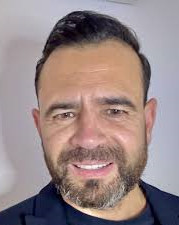
Prof. Walid Larbi
Conservatoire National des Arts et Métiers (CNAM),
Paris
Walid Larbi is Full Professor of Mechanics and Civil Engineering at the Conservatoire National des Arts et Métiers (CNAM), Paris and a member of the LMSSC laboratory. His research interests include structural dynamics, non-linear seismic analysis, reduced-order modeling, and vibro-acoustics. He has authored more than 100 publications and supervised over 12 PhD theses. He is head of the CNAM BTP “Structures” programs, training over 70 engineers per year, and leads CNAM’s international activities in Lebanon, Morocco, and Tunisia. In 2024, he was named Knight in the French Order of Academic Palms
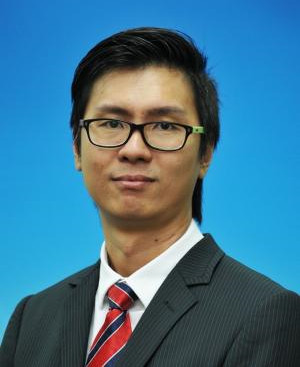
Assoc. Prof. Yap Soon Poh
Universiti Malaya, Malaysia
Dr. Yap Soon Poh is an associate professor in the Department of Civil
Engineering at Universiti Malaya, with expertise in sustainable construction
materials and advanced concrete technologies. His research focuses on the
development of green and high-performance materials, including lightweight
concrete, bio-composites, and recycled construction materials, as well as
the application of machine learning techniques for structural prediction and
optimization. He has published extensively in reputable journals,
contributing to areas such as concrete-filled steel tubes, self-healing
concrete, and sustainable material innovation.
In addition to his academic work, dr. Yap actively engages in
interdisciplinary and industry-linked research projects, addressing
practical challenges in sustainable infrastructure development. His research
aims to bridge fundamental material science with real-world engineering
applications, particularly in advancing low-carbon construction solutions
and data-driven design approaches for resilient infrastructure systems.